
NSF Research Experiences for Undergraduates and Teachers
Do Science at Coe
Welcome to NSF-supported summer research programs at Coe College. We look forward to meeting people from across the country who will participate in our nationally recognized undergraduate research program.
REU Program
"Research Experience for Undergraduates"
This program is intended for students who have completed at least one year of college and who are interested in a career in science or engineering. We encourage students from first-generation backgrounds and smaller institutions.
STIPEND
$5,835
DATES
June 1 – July 31
RET Program
"Research Experience for Teachers"
STIPEND
$9,000
DATES
June 1 – July 17
Application Instructions
For full consideration, the application should be submitted before midnight, February 6. To apply:
- Complete the online application form;
- Send (emailed digital form preferred) an official or unofficial transcript to the REU Program Coordinator (reu@coe.edu);
- Make arrangements for two letters of recommendation to be sent to the Program Coordinator (reu@coe.edu).
For questions about the RET/REU program and to receive application materials, please contact:
 Curt Kimm
REU Program Coordinator
Email: reu@coe.edu
Phone: 319.929.6936
Coe College
1220 First Ave NE
Cedar Rapids, IA 52402
Projects & Mentors
Faculty mentors from the departments of physics, chemistry and biology share their expertise in the Coe REU program. All mentors have extensive experience in supervising undergraduate research students.
At Coe, students will be working directly with their faculty investigator to:
- help design and conduct experiments;
- use modern research equipment;
- learn applied and theoretical methods in weekly workshops;
- present results in a formal poster session;
- enjoy an academically stimulating and social environment.
Musical Acoustics
Jim Cottingham
Email: jcotting@coe.edu
Students working in Prof. Jim Cottingham's group carry out studies on the acoustics of musical instruments, with a strong emphasis on wind instruments using so-called free reeds. The free reed instruments include the harmonica, the accordion-concertina family and the reed organ. A major portion of the acoustics research at Coe has been on the acoustics of the Asian free reed mouth organs, in which a free reed is coupled to a pipe resonator. These Asian instruments include the khaen (Thailand/ Laos), the sheng (China) and the bawu (China). Other recent areas of research at Coe have included the interaction of an air jet with a resonator (relevant to flute- like instruments), acoustics of tuned drum heads and the acoustics of choirs and vocal ensembles.
Musical acoustics research makes extensive use of Fast Fourier Transform (FFT) spectrum analysis and the modal analysis of vibrating systems. Studies of reed motion and modes of vibration may employ a variety of instruments including variable-impedance-transducer (VIT) proximity sensors, a laser vibrometer system and high speed photography. Acoustics research at Coe has also involved in measurement of acoustic input impedance curves of the pipes or other resonators and theoretical modeling of the motion of the air-driven reed and reed-resonator coupling. Recent areas of study include the investigation of the spectra of attack transients and measurement and visualization of sound fields within resonators. In addition to experimental measurements, recent work has included using COMSOL Multiphysics® to construct simulations. Work on these simulations will be continuing this summer.
Bio and Interests
I have been working with undergraduate students in musical acoustics research since 1990. During this period more than 70 students have been involved. Many have presented papers at national or international acoustics meetings including meetings in Cancun, Honolulu, Berlin, Vienna and Hong Kong. Several of the acoustics research students have gone on to graduate study in acoustics.
Glass Science
Jacob Wheaton
The students in Prof. Wheaton's group will carryout projects related to the fundamental properties of glasses. The first of these projects is to study the crystallization behavior of phosphate glasses. This project involves synthesizing the phosphate glasses and subjecting them to several different heat treatments, both using a furnace and thermal analysis techniques such as differential thermal analysis (DTA) and differential scanning calorimetry (DSC) to investigate the nucleation and growth rates of the crystals that form and then investigate the overall crystallization rate. Another project will investigate the high temperature ionic conductivity of solid materials, particularly glasses and ceramics that are being investigated for use in solid-state batteries and fuel cells. Furthermore, Prof. Wheaton has recently secured a small travel grant to collaborate with a NASA center and is looking to generate preliminary data on synthesizing glasses using simulated Martian regolith, with the goal to generate novel glass compositions that can be manufactured on Mars.
Bio and interests:
This is Jacob’s first year at Coe College and he is looking forward to starting a strong research program this summer. Jacob’s background is in materials science and engineering, with a focus on glass science and engineering. He is interested in studying the physical properties of glass, particularly the crystallization and viscosity behavior of phosphate glasses and the ionic conduction properties of glasses as well. Jacob is working to continue collaborations from his previous work, particularly with the University of Rennes in Rennes, France. During his Ph.D. work, Jacob worked to develop thin film oxy-sulfide glasses for use in solid-state batteries. He developed a thin film drawing process similar to that used to create the ultra-thin glass used in many cell phone screens. With this, Jacob was able to synthesize highly ionically conductive lithium glasses at thicknesses near 50 μm. This required extensive knowledge of the crystallization and viscosity behavior of the glass chemistry. Jacob’s research at Coe is to take a deeper dive into crystallization and viscosity behavior of glasses that have minimal research into them, such as phosphates and borates.
Cellular & Molecular Biology
Cassy Cozine
Email: ccozine@coe.edu
Research in Dr. Cozine’s lab involves the use of the small non-parasitic roundworm, Caenorhabditis elegans, as a model eukaryotic organism for one of two primary research goals:
1. To more closely study homeopathic compounds that are thought to modulate the stress and inflammatory response and determine what effects, if any, these compounds have on stress and inflammation as well as the molecular and cellular mechanisms underlying their effects.
The stress and infection response in C. elegans has many homologous pathways to the inflammatory response of the innate immune system of humans, and can therefore be an excellent organism to begin to examine the effects of possible new compounds that modulate inflammation and other stress pathways in humans. Of particular interest in the lab is the homeopathic compound curcumin, a biologically active component of turmeric, which has been proposed to have immunomodulatory effects on the process of inflammation.
2. To use C. elegans to identify compounds that may act as endocrine disruptors.
Endocrine disruptors, such as BPA, often bind to hormone receptors of the reproductive system, such as estrogen, and alter the reproductive development of the organism. By examining estrogen sensitive gene expression as well as egg laying rates, the effects of candidate hormone disruptors can be determined.
Dr. Cozine is a member of Coe College's Biology Department.
Optics
Mario Affatigato
Phone: 319.399.8483
Email: maffatig@coe.edu
The students in Prof. Affatigato's group will carry out projects involving laser desorption and ionization (LITOF-MS), Raman spectroscopy, atomic force microscopy (AFM), x-ray diffraction (XRD) and scanning electron microscopy (SEM) measurements on oxide glasses. They will be thoroughly involved in the process, from glassmaking and crystal growing to operating the spectrometers, to data analysis. These projects will expose students to a variety of physical instrumentation, from Nd:YAG and nitrogen lasers, aerolevitation, to vacuum pumps, to microchannel plates, data acquisition electronics, etc. One project, on structural characterization using the LITOF-MS, will involve modeling of fragmentation patterns, isotopic signatures, structural models to explain the observed spectra, etc. Complementary Raman/FTIR measurements will also be made. In a second project, the REU student will perform AFM and SEM measurements on glasses that have been modified by laser irradiation and/or for light scattering applications. In a third, they can carry our structural characterization of composite materials (glasses+polymers) that have bactericidal properties. Finally, REU students will also have the choice to work with Professor Affatigato on the study of vanadium-based glasses for particle detector applications. All projects combine condensed matter theory, glassmaking and optical spectroscopy.
Bio and Interests
My research interests lie in the area of the optical properties of glasses and the relationship between such properties and the structure of the glass. Glasses of interest to me include alkali borates, alkali bismuthates, heavy metal oxide glasses and vanadium-based glasses. In particular, my recent work has focused on electronically-conducting glasses and glasses made using aerolevitation (especially aluminates). The optical properties my students and I investigate include absorption, fluorescence, optical basicity, laser-induced structural modification, as well as some interactions of light with matter such as laser-induced desorption and ionization.
The Affatigato group has built close to 150 alumni members. Prof. Affatigato typically supervises 6-8 students per summer and is a member of the physics department.
Particle Detectors
Building a 3D Dosimeter for Medical Applications
Ugur Akgun
Email: uakgun@coe.edu
A 3-D dosimeter fills the need for treatment plan and delivery verification required by every modern radiation-therapy method. The Akgun group is working on developing a water-equivalent solid 3-D dosimeter that is based on a novel radiation-hard scintillating material. In summer of 2022, the group will work on optimizing a new polystyrene-based scintillating material and build a second-generation prototype.
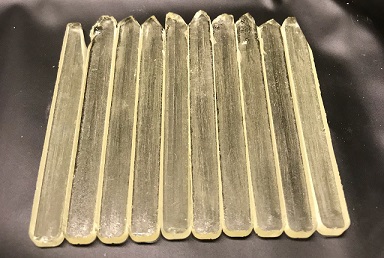
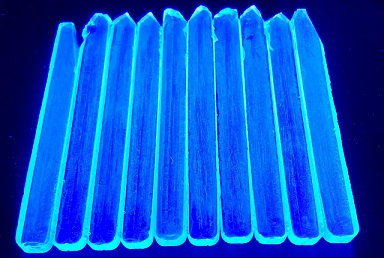
After producing the scintillating bars, we will test the light production capabilities and radiation hardness of the scintillating material. We will then build a prototype and test it with an X-Ray beam at the Ohio State Medical School.
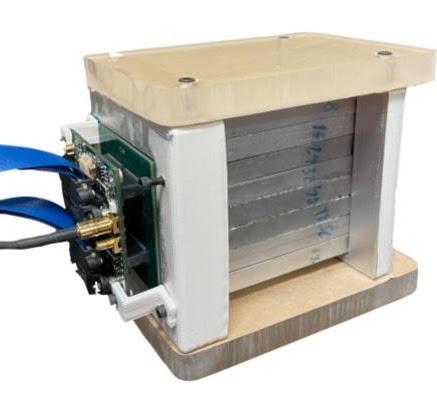
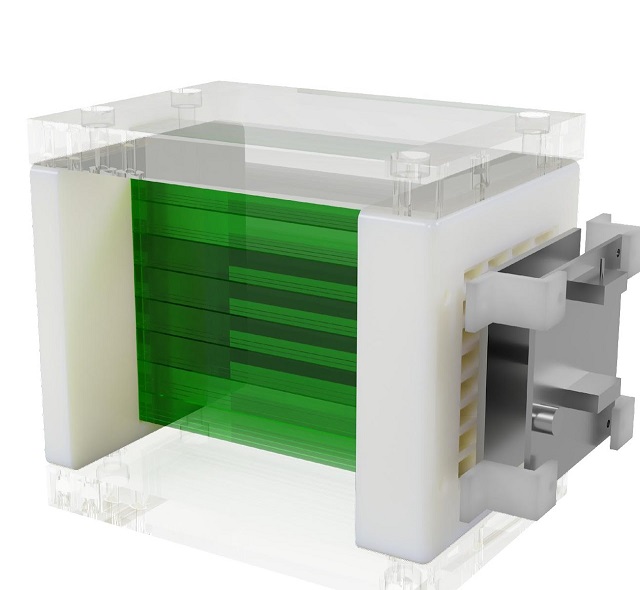
First-generation prototype built by students
A 3-D dose distribution be reconstructed by a neural network specifically trained for this prototype. The detector will be simulated using Gate software and the data will be used for training an Artificial Neural Network. The machine learning method will be applied on test beam data to reconstruct the 3D dose distribution.
Ugur Akgun is a member of the physics department.
Cell & Molec Bio: P Storer
Paul Storer
Email: pstorer@coe.edu
Research in Dr. Storer’s lab will investigate the mechanisms of immunological stimuli on microglial cell activation and examine the ability of selective estrogen receptor modulators (notably tamoxifen) to act as suppressors of this activation. Specifically, determination of effects on cytokine production and antigen-presentation abilities from these cells will be the main focus.
All-in-all, these studies will help contribute to the study of any role or effects that tamoxifen (taken as an estrogen-positive cancer therapeutic) may have in the central nervous system.
Dr. Storer is a member of Coe College's Biology Department.
Biochemistry
Chris Stead
Email: cstead@coe.edu
Research in Dr. Stead’s lab focuses on the bacterium Coxiella burnetii and developing a more complete picture of its virenose and phospholipid metabolism. A better understanding of these pathways could contribute towards the development of a C. burnetii subunit vaccine and help with studies investigating the environmental stability of C. burnetii.
Both projects will begin by introducing students to modern biochemistry and molecular biology techniques required for the cloning of candidate genes along with instrumentation such as a thermal cycler and UV-Vis spectrometer. Next students will optimize protein expression while learning how to perform SDS-PAGE and Western blots. Expressed proteins will be purified using a His-Tag and affinity chromatography. Finally development of in vitro biochemical assays to ascertain the function of the purified enzymes will introduce students to various techniques, including UV-Vis spectroscopy, thin layer chromatography and mass spectrometry.
Dr. Stead is a member of the chemistry department.
Particle Physics & MACRO
James Wetzel
Email: jwetzel@coe.edu
REU candidates working with Dr. Wetzel have several options to choose from:
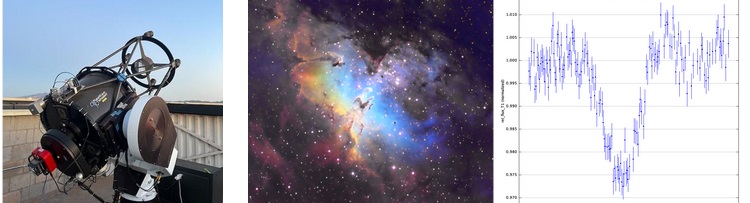
Study of the RADiCAL concept: A radiation tolerant high performance calorimeter detector module for a future circular collider or high energy astrophysics detector. This project requires analysis of data using python and C++, design of detector components using circuit or CAD software, and prototyping of parts with 3D printing. An REU student can have the choice of which component to work on.

Contribution to the MACRO project: A group of Midwest colleges co-manages a remotely controlled robotic telescope at the Winer Observatory in Sonoita, Arizona. We are actively developing the shared server technologies using Python, JavaScript, MySQL and HTML that help us schedule and decide what the telescope takes pictures of. An REU student could also choose to participate in exo-planet search analysis, studying light curve data in search of an eclipsing event.
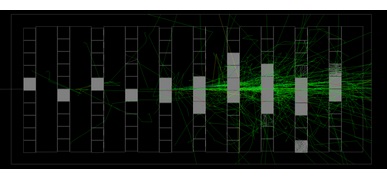
QWall: A highly granular calorimeter concept for future detectors. Like the RADiCAL project, we have been testing this concept at CERN in electron beams, and could use help analyzing the data with python / C++ / ROOT. We could also use help simulating the concept using C++ and the GEANT4 library.
Interfacing Engineering with Biology
Xiang Li
Email: xili@coe.edu
Having joined Coe’s new Engineering Physics program in Fall 2025, Xiang Li is focused on rapid prototyping for biomedical applications. Here’re the skill sets you will be experienced with:
- Microfabrication (making small things)
- Biofabrication (making bio-related things)
- Digital design (CAD or PCB)
- Rapid prototyping (laser cutting, 3D printing, melting, cooling, coating, polishing and sometimes gluing)
- Embedded system (from hardware to software) and robotics (form hardware to software)
Project 1: Biosensors
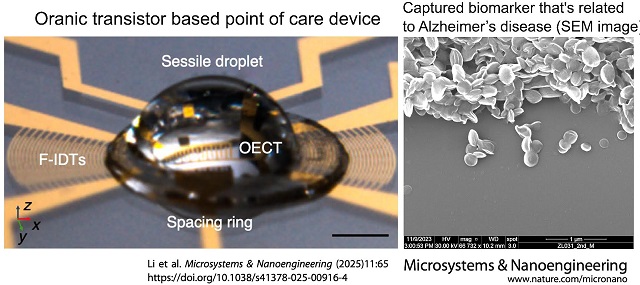
Standard silicon transistors are fast but struggle to interface with biology. We work with Organic Electrochemical Transistors (OECTs), devices that are biocompatible and thrive in liquid interface. Before I came to Coe, I used them before to detect biomarkers of Alzheimer’s disease (AD), and I am interested to see what else they can do, from clinical detection devices to water quality. With the help of embedded systems, we can have a real-world impact.
Project 2: Glass-ceramics based organ-on-a-chip device
Modern biology grows on plastics and other polymers. For some applications such as to grow a human liver on a chip, we are here to explore alternative material (glass/ceramics, beneficial for drug testing). And if we could create microstructures (50 – 120 um, the thickness of a human hair) to mimic the microenvironment of a human liver, even better.

Project 3: Robotics and Mechatronics
I believe the future of the biology involves robotics and automated systems that carry out repetitive tasks 24/7. With your help (and 3D printing, motors, sensors and coding), we can build a robotic micro hand to achieve sub-micron precision, and babysit cells, tissues and organs that we grow on a chip.
Environmental Microbiology
Michael Leonardo
Email: mleonard@coe.edu
Research opportunities with Dr. Leonardo are available to students with a variety of academic backgrounds. Currently, biofilm formation is the primary focus in his lab. In nature, biofilms are mixed communities of bacteria and is a common survival strategy of many bacteria. One key aspect of community development and biofilm formation is cell-cell communication amongst the bacterial community members.
Dr. Leonardo’s lab is exploring the interactions of two genera of bacteria that interact because of their overlapping niches: the marine pathogen Vibrio parahaemolyticus and diverse Shewanella species. In V. parahaemolyticus and certain marine species of Shewanella, biofilm formation is controlled by a homologous cell-cell signal transduction pathway (ScrABC). Investigations show a similar signaling ligand (S-signal) is produced by both of these Vibrio and Shewanella signaling systems. Further experiments have shown that cloned scrABC genes of one species can complement null mutations in their homologues from the other. Bio-assays have demonstrated potential cross-talk between both bacteria as well.
To determine the impact of this intercellular cross-talk, we will approach this on two fronts, genetically and in vivo. We will be developing a plasmid-borne SCARless system for CRISPR-generated mutations in the S-signal production and response in Shewanella. Gene expression will be monitored by qPCR and other methods. In addition, we will grow biofilms using different combinations of Vibrio and Shewanella strains then use confocal laser-scanning fluorescent microscopy and Surface-enhanced Raman Spectroscopy (SERS) to study the architecture of biofilms. Classic microbiological protocols will be employed to study the interactions between the two genera within the biofilms.
Dr. Leonardo is a member of the Coe College Biology Department.
Application Instructions
For full consideration, the application should be submitted before midnight, February 6. To apply:
- Complete the online application form;
- Send (emailed digital form preferred) an official or unofficial transcript to the REU Program Coordinator (reu@coe.edu);
- Make arrangements for two letters of recommendation to be sent to the Program Coordinator (reu@coe.edu).