

September
The American Presidency
Bruce Nesmith, Professor Emeritus of Political Science
September 3, 10, 17, 24
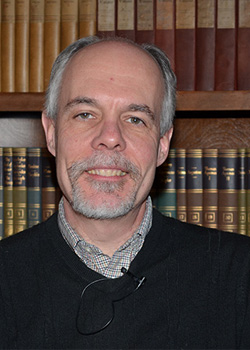 This four-week forum will examine an American original: the office of President of the United States. Originating in the U.S. Constitution of 1787, the office has evolved considerably. This series presented by Professor Emeritus of Political Science Bruce Nesmith seeks to understand the office and those who have held it. Week one will look at the origins of the office and early presidents. When the U.S. emerged in 1776, there was no national executive. A decade later, the Constitution created a very different system that included the presidency, an innovation that sparked debate and concern. We will discuss how early presidents put their stamp on the new office, with emphasis on George Washington, Thomas Jefferson and Andrew Jackson. Session two will touch on later periods, exploring the presidency when its power was mostly constrained. We will examine cases of strong presidential leadership like those of Abraham Lincoln, Theodore Roosevelt and Woodrow Wilson. Session three turns to the modern presidency, particularly the terms of Franklin D. Roosevelt and Ronald Reagan. In retrospect, FDR’s dramatic reshaping of presidential power had precursors even as he became the model for successors like Truman, Eisenhower and others. This session will also consider assessments of presidential greatness. What makes it more or less likely that a president will be ranked highly in academic surveys or appear on coins, monuments or other commemorative forms? The final session looks to the present and future of the presidency. While the extraordinary assertions of executive power in the present day have precursors, they may also signal new trends. To what extent is the current presidency a model for future executives and how far can the constitutional presidency be stretched? As we peer beyond the present, we will consider future challenges, opportunities and capacities of the American presidency.
Thursday Forum is held in Kesler Auditorium on the first floor of Hickok Hall. Each weekly session begins with registration and refreshments from 8:45-9:15 AM, followed by the lecture until 11:30 AM. The presentations blend lecture, media such as film and music, and discussion.
Admission to each four-week forum series is $40. Admission to individual lectures and each session of two- and three-week forums is $12 per week. Admission includes the lecture and morning refreshments of coffee, tea and pastries. Payment can be made in person on Thursday mornings by cash or personal check. Credit card payments can be processed by registering online in advance.
In the event of inclement weather, consult local media outlets to find out if the day’s forum will take place.