

February
Dvořák and Iowa: Cultural Crossroads
William Carson, Alma A. Turecheck Professor of Music
February 4
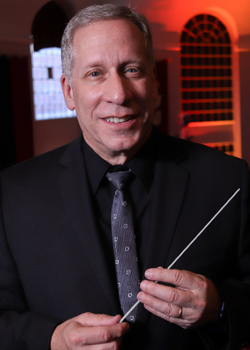 In the summer of 1893, Czech composer Antonín Dvořák spent nearly three months in Spillville, Iowa. The music he experienced while visiting Iowa and other places in the United States changed his artistic direction and led to some of his most enduring compositions. This one-week forum led by Alma A. Turecheck Professor of Music William Carson will explore Dvořák’s Iowa experience and the Euro-American, American Indian and African American music that influenced the Czech composer. The session will begin with a lecture that provides an introduction to Dvořák’s life and music. The second half of the session will feature a live musical performance of examples of Dvořák’s work presented by members of Cultural Crossroads, a visiting musical ensemble hosted by the Coe College Marquis Fine Arts Series. The Cultural Crossroads ensemble will feature Kenneth Kellogg (bass), R. Carlos Nakai (Native flute), Will Clipman (world percussion), the Ciompi Quartet and Pamela Freund-Striplen (curator, narrator, violist). This lecture-performance will take the audience on a musical and cultural journey that highlights Iowa’s connection to one of the world’s most notable musical influences.
The Many Stories of Glass
Mario Affatigato, Fran Allison and Francis Halpin Professor of Physics
February 11, 18, 25
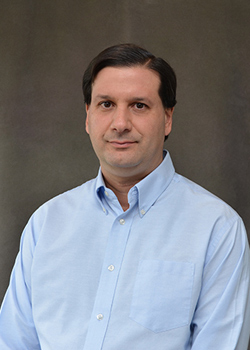 Glass has accompanied humanity since its earliest times. From an origin in which glass was considered akin to jewelry by the ancient Egyptians, it became an everyday object after the invention of glassblowing and its widespread adoption in the Roman Empire. In this three-week forum presented by Fran Allison and Francis Halpin Professor of Physics Mario Affatigato, each presentation will reveal a different facet of glass as well as some of its secrets. The series will explore glass in art and architecture, glass made by nature and by biological organisms, and the surprising ways glass has shaped human history. We will look at the intriguing role of glass vessels and instruments in alchemy, the origin of the fabled glass created on the island of Murano near Venice, and the material’s transformative impact on science through lenses, telescopes, microscopes and laboratory equipment. We will discuss glass in its modern context, where it has found surprising uses in medicine, dentistry, lasers, cell phones and other electronic devices. Week one’s session will focus on the historical origins and development of glass. In week two, we will turn to glass art and the evolution of glass production in the Middle Ages. The final session will highlight the uses and development of glass in science and technology, bringing the story up to the present day and the critical role of glass in today’s world.