
From the classroom to CERN: Coe physics students to conduct research in Switzerland, Chicago and New Mexico
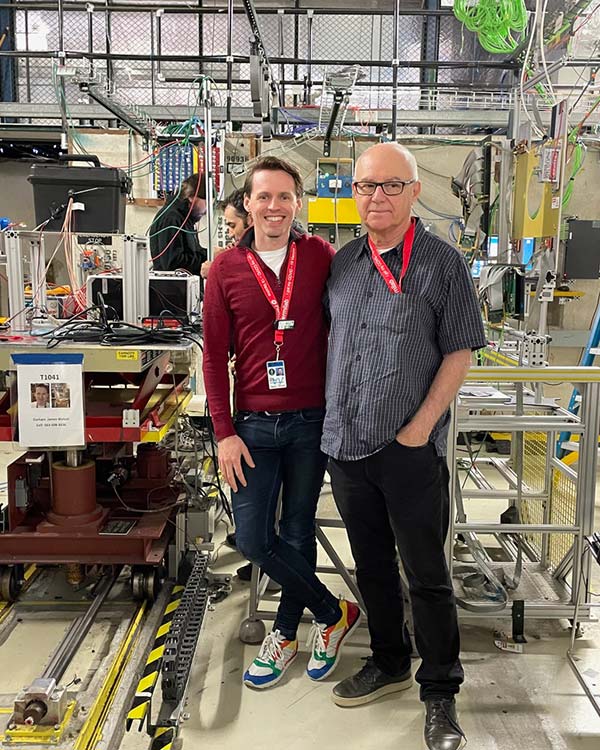 For most college students, visiting the world’s largest particle physics laboratory is a dream. For Coe College students, it’s about to become a class assignment.
Thanks to a new $1.3 million federal grant, Coe College is launching a global research initiative that puts undergraduate students in the driver’s seat of high-level physics. Coe will lead the research collaboration that includes research universities like Caltech, Notre Dame and the University of Iowa.
Funding for the project, titled "Advanced Calorimetry for High Energy Physics," comes from the U.S. Department of Energy (DOE) Office of High Energy Physics. The research focuses on developing next-generation technology for particle physics instrumentation.
The grant creates transformative opportunities for Coe undergraduates. Students will travel nationally and internationally to test the technology they help develop, working alongside leading researchers at:
• CERN in Geneva, Switzerland (the world’s largest particle physics laboratory)
• Fermilab near Chicago
• Los Alamos National Lab in New Mexico (a classified research facility)
“This award reinforces Coe’s reputation as a place where undergraduates don’t just learn science — they do science at the highest level,” said Dr. James Wetzel, associate professor of physics at Coe College and the project’s principal investigator. “It is rare for a college of our size to lead a collaboration with partners like Caltech and CERN. It proves that our students are ready to contribute directly to the global scientific enterprise.”
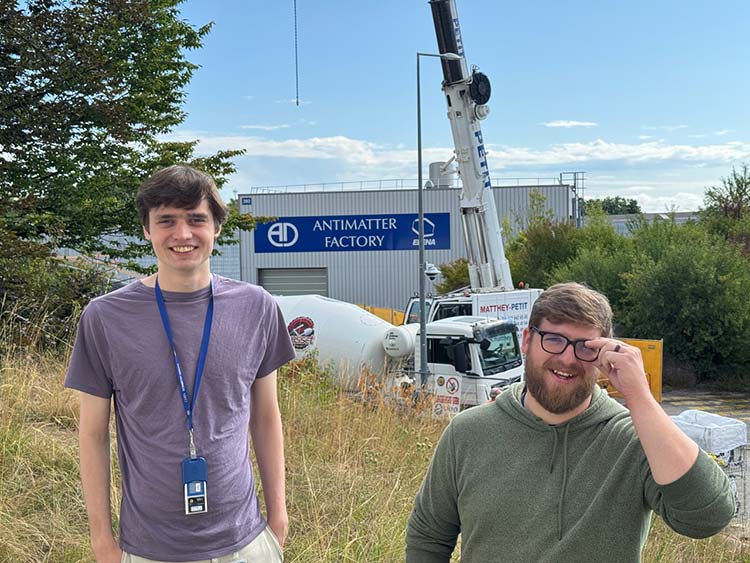 Beyond undergraduate research, the grant will fund outreach to the next generation of Iowa scientists. Coe will host two annual workshops designed to expose high school students — particularly those from rural areas — to high-energy physics instrumentation. Funding is available to assist with student travel to Coe, ensuring access for students across the state.
Additionally, the grant supports the hiring of a dedicated instrumentation technician at Coe to maintain laboratory equipment and fabricate experimental apparatus, further bolstering the college’s research infrastructure.
"At Coe, you get the one-on-one mentorship of a close-knit college, but you also get access to the same world-class facilities as the biggest universities," said Coe College Provost Angela Ziskowski. "Our students are presenting at international conferences, publishing papers and building the actual equipment used to discover how the universe works."
The opportunity will help students stand out as employers and grad schools look for experience. By leading a project funded by the Department of Energy, Coe students graduate with a resume and network of professional contacts that rivals those of Ph.D. candidates.
Other experiences and connections within Coe’s STEM programs are creating valuable opportunities as well:
• Fran Allison and Francis Halpin Professor of Physics Dr. Mario Affatigato ’89 was just named president of the American Ceramic Society.
• Coe’s Research Experiences for Undergraduates site was renewed last year with an award of $464,737 funded by the National Science Foundation (NSF).
• Coe was the recipient of a $225,000 grant from NASA to acquire high-performance computing clusters last year.
• A just-announced partnership with Google AI for Education Accelerator to provide the most advanced artificial intelligence tools, resources and training.
In the past five years, Coe has also dedicated the David and Janice McInally Center for Health & Society, a one-of-kind academic center to complement Coe’s MedQuarter location; and launched new programs in data science, engineering physics and aviation management & flight operations.