
Aviation studies & flight operations program growth drives Coe College to expand its presence at the Eastern Iowa Airport with a larger hangar space
Coe College aviation studies & flight operations students have a new base of operations at the Eastern Iowa Airport (CID) to support the program’s growing enrollment.
A larger space
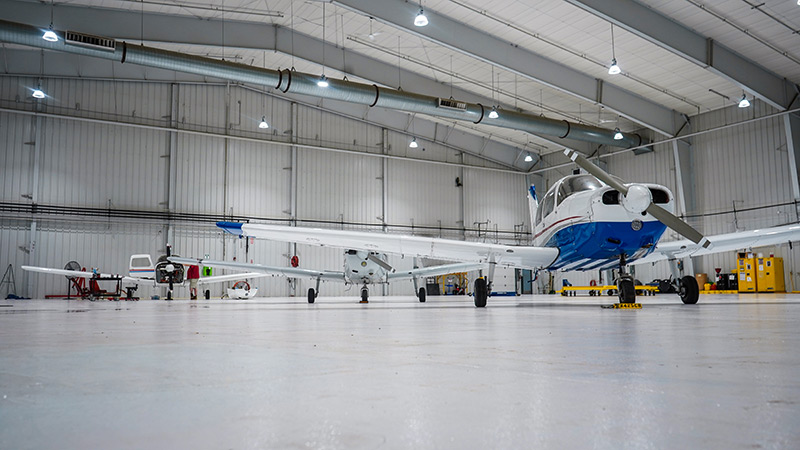 This academic year, students, staff and faculty began operating from the former fixed-base operator facility at CID, establishing a larger Coe College aeronautical field station. The facility is located directly on the tarmac adjacent to CID’s control tower, placing aviation students in the middle of the airport’s full commercial flight schedule — a prime learning environment for future pilots. The transition was completed ahead of the Fall 2026 term and was driven by program enrollment growth.
“The response to our aviation studies & flight operations was overwhelmingly positive in our first year of offering the concentration, and we had strong initial enrollment,” said Director of Aviation Programs Anna Dvorak ’21. “There continues to be healthy demand for air travel and we want to help pilots and other aviation personnel be prepared for continued expansion.”
 Fall 2025 was the first academic term that the flight school portion — flight operations — of Coe’s aviation program was active. Academic courses began on campus during the Spring 2025 term with an Introduction to Aviation course taught by Eastern Iowa Airport Director Marty Lenss. The program has continued to grow since its launch, with 45 students participating in flight operations during the Fall 2026 term.
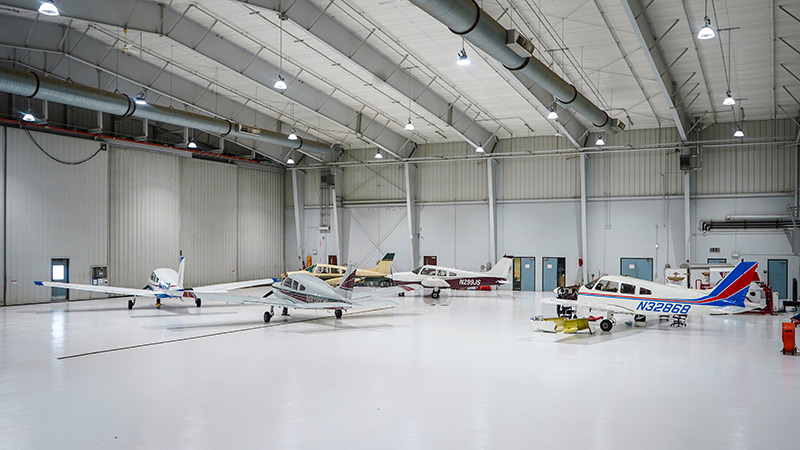
In partnership with ATD Flight Systems, Certified Flight Instructors previously taught lessons out of Coe’s original hangar, which accommodated four aircraft. The new facility will house six aircraft, with additional room to expand as enrollment continues to grow.
A program on the rise
With the first full class of Kohawk aviators returning and enrollment in the aviation program continuing to increase, the new facility offers more space for meetings, study sessions, networking events and the program’s Redbird flight simulator, in addition to housing more aircraft. The growth in the program mirrors CID’s growth as the airport continues to set monthly and annual passenger records while adding more daily flights.
“Seeing Coe’s program take off like this has been incredibly fulfilling. I’ve watched student aviators learn and grow as pilots every day, and the fact that’s going to continue to happen at a larger scale is impactful for the airport and the industry as a whole,” said Eastern Iowa Airport President & CEO Marty Lenss.
The extra space at CID will also allow Coe to continue guaranteeing that all student aviators are able to fly in their first term. The current pilot shortage is estimated to be at 17,000, and that gap is driving starting salaries for commercial pilots toward $90,000 in some instances. On campus, C3: Creativity, Careers, Community – the Princeton Review’s #16 Best Career Services in the nation – actively supports aviation students through industry engagement. C3 staff have built connections within the aviation industry and have hosted representatives from airlines on campus, creating opportunities for Kohawk aviators to connect with potential employers and learn more about career pathways.